
Native Plants, Grasses, and Trees
We have over 100 upland and wetland plant species in production each year and over 40 native tree species in stock, native to Missouri & Kansas.
Plants are available in our deep cell plugs and many in our #1 sized pots. Whether you are restoring a native prairie or just upgrading your flower bed for pollinators, we can get you started.
Please email or call for availability.
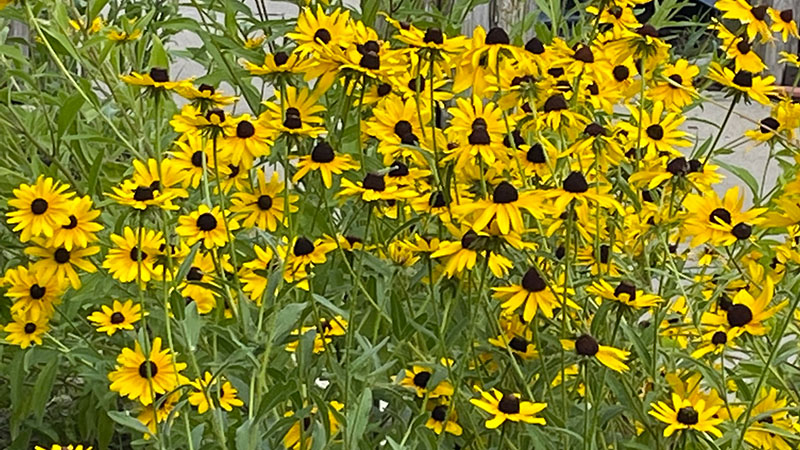
Black-eyed Susan
Rudbeckia hirta
This is the quintessential Black-eyed Susan of the native stars with its large golden yellow flowers and dark-brown, conical centers. It is easy to grow and is a species often used in native wildflower seed mixes. Plants produce a bright show of color mid-spring through summer, and will self-seed for a later display.
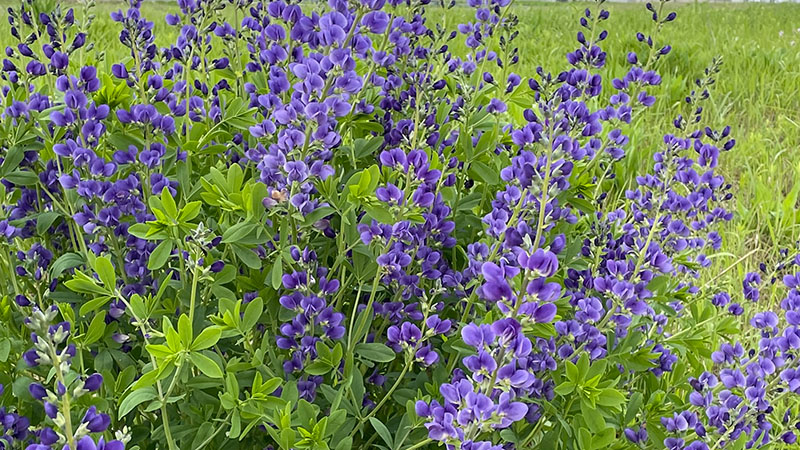
Blue False Indigo
Baptisia australis
A hardy, drought-tolerant perennial native to North America.It typically grows 3 to 4 feet tall and wide, producing upright spikes of saturated blue or violet flowers in late spring to early summer.The plant features blue-green, clover-like foliage and is highly attractive to pollinators such as butterflies and bees.
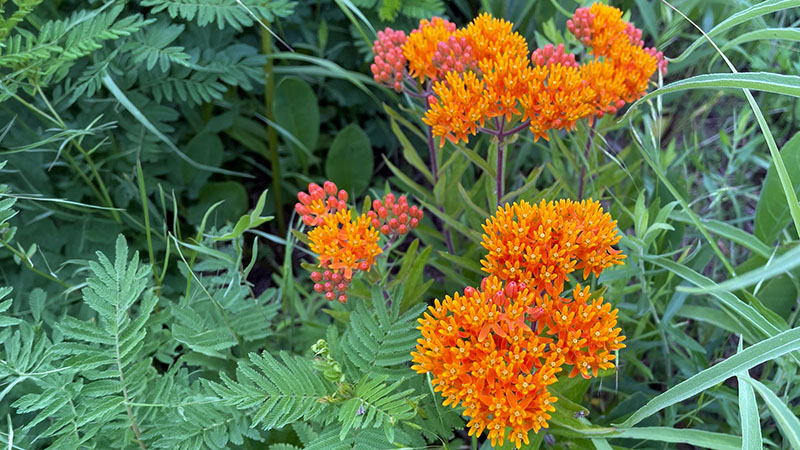
Butterfly Milkweed
Asclepias tuberosa
A species of milkweed native to North America.It is characterized by its vibrant orange flowers that bloom from June to August, attracting pollinators like monarch butterflies.
Unlike other milkweed species, it typically has watery sap rather than a thick, milky substance.It thrives in full sun and dry to normal soil conditions.
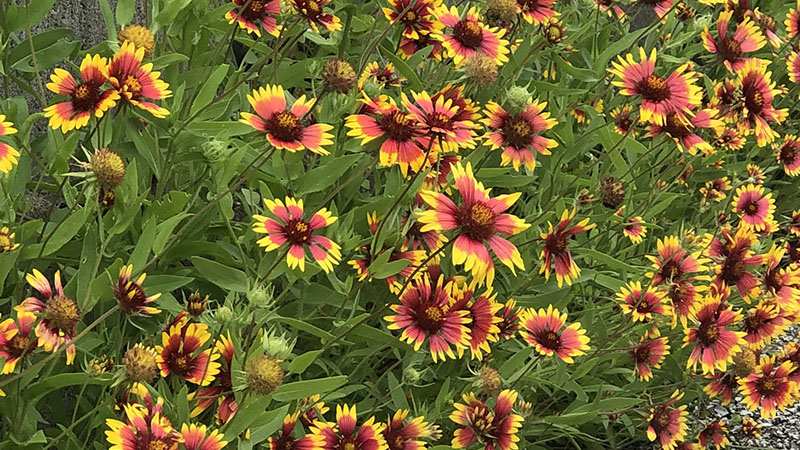
Indian Blanket
Gaillardia pulchella
The branching stem of this plant is hairy and upright. Leaves are wide and alternate, mostly basal, with edges smooth to coarsely-toothed or lobed. The pinwheel, daisy-like flowers are vividly colored with red, orange and yellow. The center of the flower tends to be more red-violet, with the outer tips being yellow. It blooms in summer to early fall.
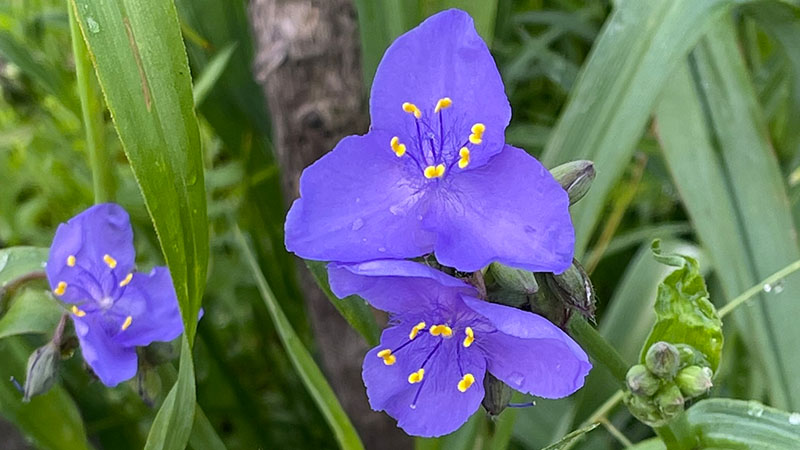
Ohio Spiderwort
Tradescantia ohiensis
This is a herbaceous perennial plant about 2'-4' tall. Grass-like, dark blue-green leaves grow in clumps and can be invasive in ideal growing conditions as it self seeds. From late May to early July, clusters of blue, one-inch flowers appear on graceful stems. A lovely addition to the woodland garden.
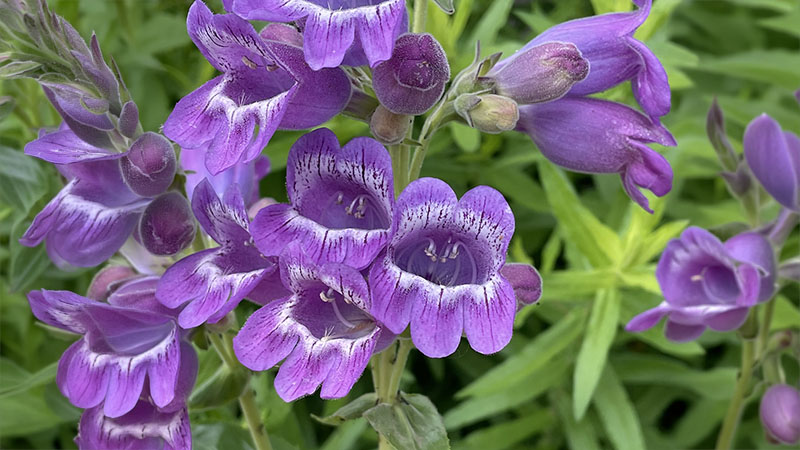
Purple Beard Tongue
Penstemon cobaea
In June, show-stopping spikes appear of loosely spaced white to violet to deep purple two inch long tubular flowers bloom on erect stems. They are larger than other penstemon. Often seen blooming in late spring on rocky outcrops and road cuts, this is a great selection for dry areas.
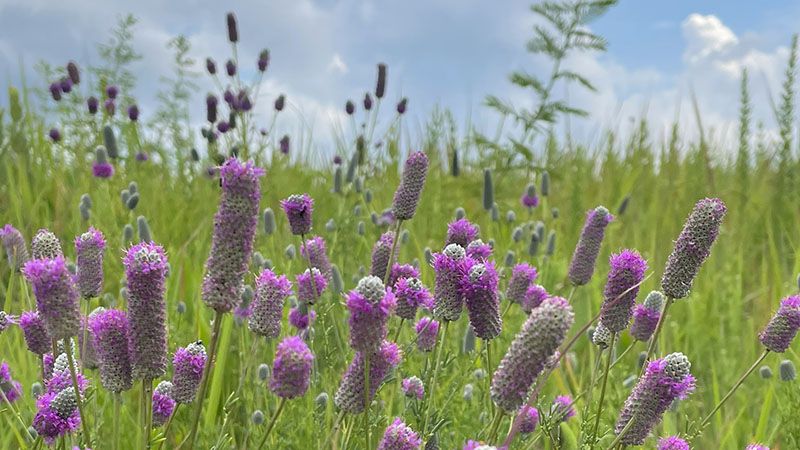
Purple Prairie Clover
Dalea purpurea
In summer, many cylindrical-shaped heads of purple flowers with orange stamens dance on wiry stems. This plant is an important component of Midwestern because it is a nitrogen fixer. The plant has a ferny appearance because of the small dark leaves. It thrives in full sun and dry to medium soil moisture, making it suitable for prairie restorations and pollinator gardens.
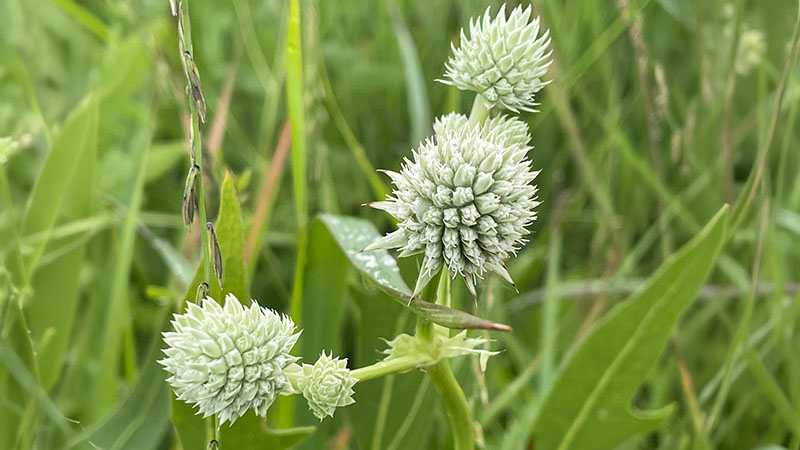
Rattlesnake Master
Eryngium yuccifolium
A perennial herb of the parsley family native to the tallgrass prairies of central and eastern North America. This very interesting plant is topped by stiff clusters of round heads of greenish white spiky flowers. Its sword-shaped, medium green leaves make it a great architectural feature in the garden. It was once used to treat rattlesnake bites.
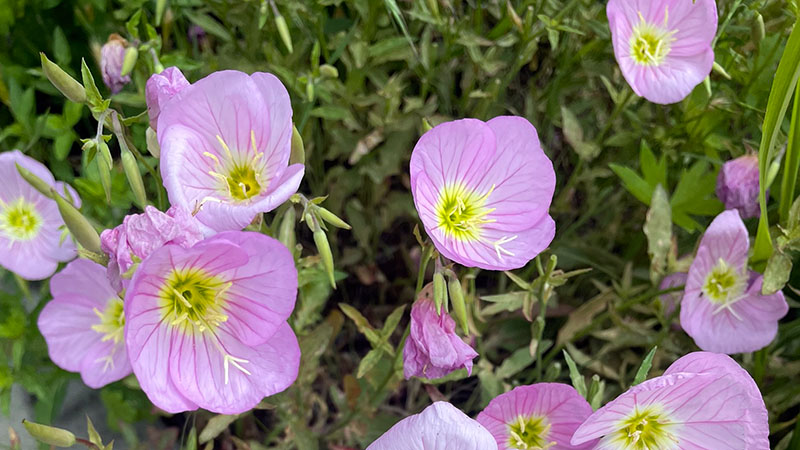
Showy Evening Primrose
Oenothera speciosa
These flowers native to the grasslands of Kansas and Missouri are also commonly known as pinkladies or Mexican primrose.They feature large, cup-shaped blooms with four petals, typically ranging from soft pink to white, and a distinct yellow throat.
These perennials thrive in full sun and well-drained soil, often spreading vigorously to form ground cover.
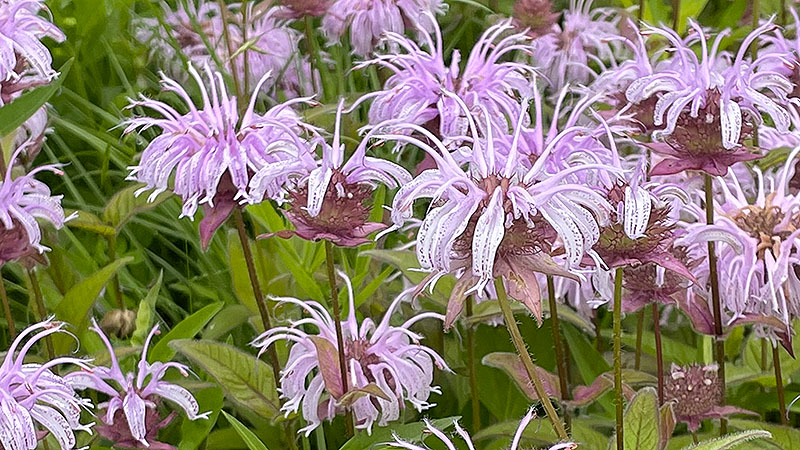
Wild Bergamot
Monarda fistulosa
Native North American wildflowers that produce lavender to pink, tubular flowers in the summer.The plant is a member of the mint family and is valued for attracting pollinators like bees, butterflies, and hummingbirds.The aromatic leaves are sometimes used to make tea, though it is not related to the true bergamot orange used in Earl Grey.
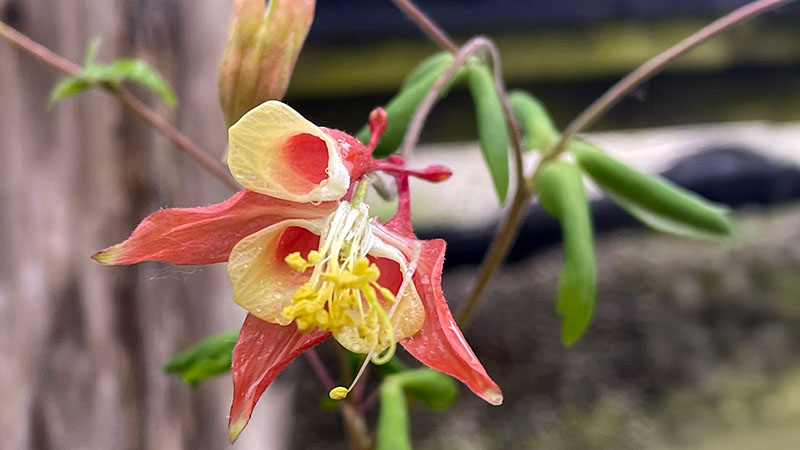
Wild Columbine
Aquilegia canadensis
It is easily recognized by its unique dangling, bell-like red and yellow blossoms.It is a hardy perennial native to North America, often reaching heights between 1 and 3 feet.
These flowers are highly attractive to hummingbirds and other pollinators, thriving in conditions ranging from full sun to partial shade.
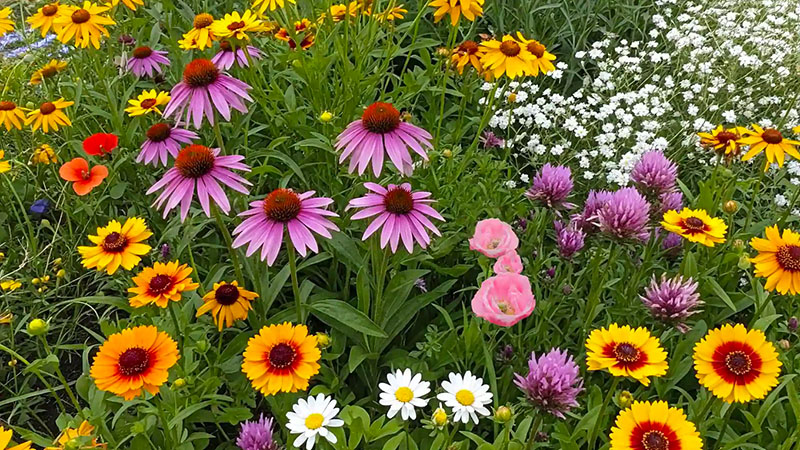
Native Seed Mixes
A native seed mix is a blend of regionally appropriate local wildflowers and grasses designed to support local pollinators, restore natural habitats, and thrive with minimal maintenance.
We have several House Mixes available:
-
- Perennial Burst
- Prairie Panorama
- Mesic Prairie
- Drainage Stabilization
Custom Blends are also available.
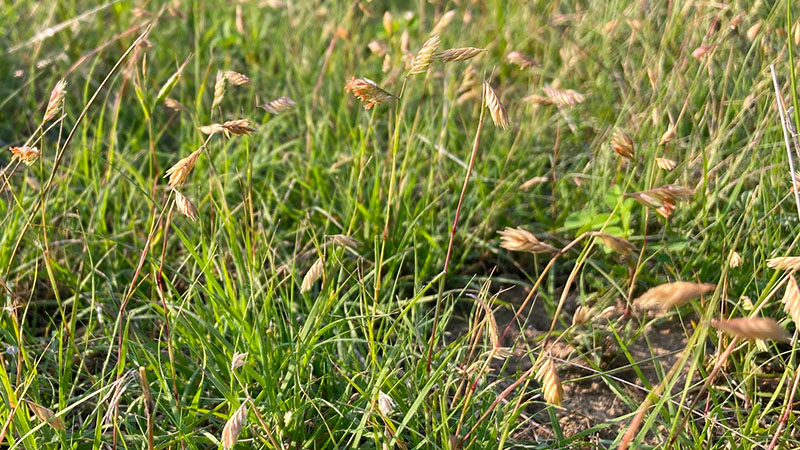
Buffalo Grass
Bouteloua dactyloides
A North American prairie grass native to Canada, Mexico, and the United States. It is a short grass found mainly on the High Plains and is co-dominant with blue grama over most of the shortgrass prairie.
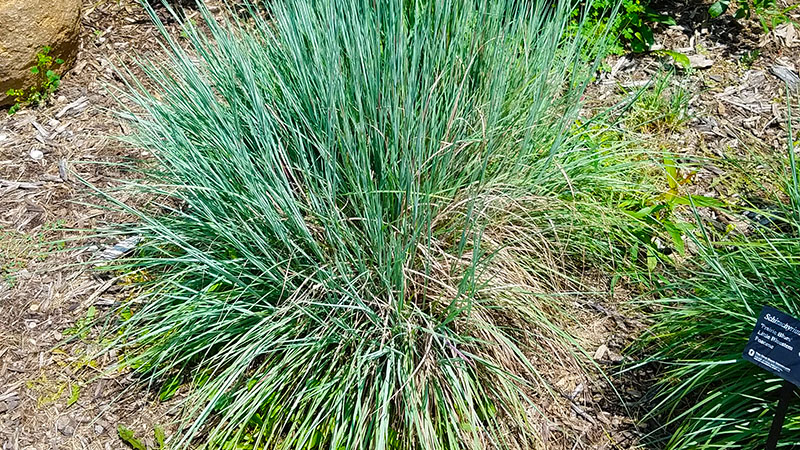
Little Bluestem
Schizachyrium scoparium
A North American native perennial warm-season bunchgrass. It grows 2 to 3 feet tall, featuring blue-green summer foliage that turns a striking copper-orange to deep red in the autumn.
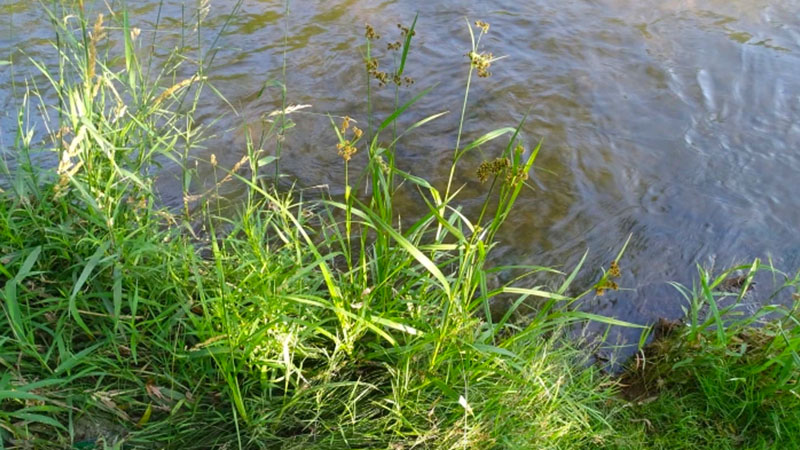
Dark Green Bulrush
Scirpus atrovirens
A native perennial sedge that thrives in wet, sun-drenched ecosystems throughout eastern Canada and the United States. It is highly valued for wetland restoration, erosion control, and water filtration.
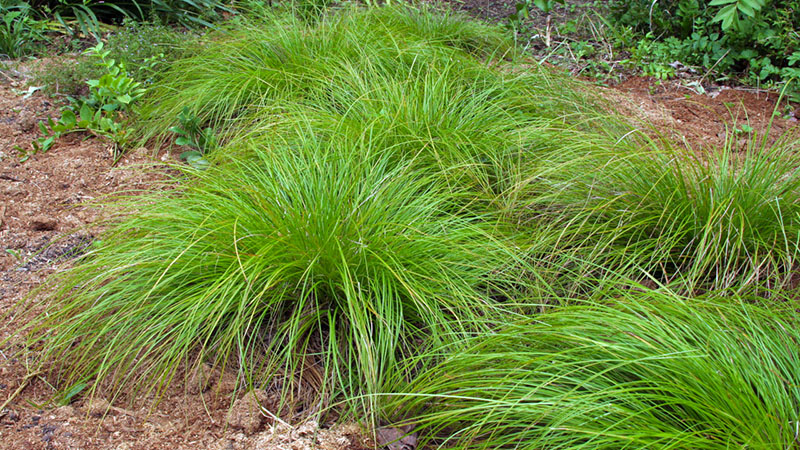
Pennsylvania Sedge
Carex pensylvanica
A low-growing, shade-tolerant native perennial sedge celebrated as a premier alternative to traditional turf grass. Known for its delicate, arching, hair-like bright green foliage, it creates a soft, flowing, wave-like carpet in landscapes where typical grasses struggle.
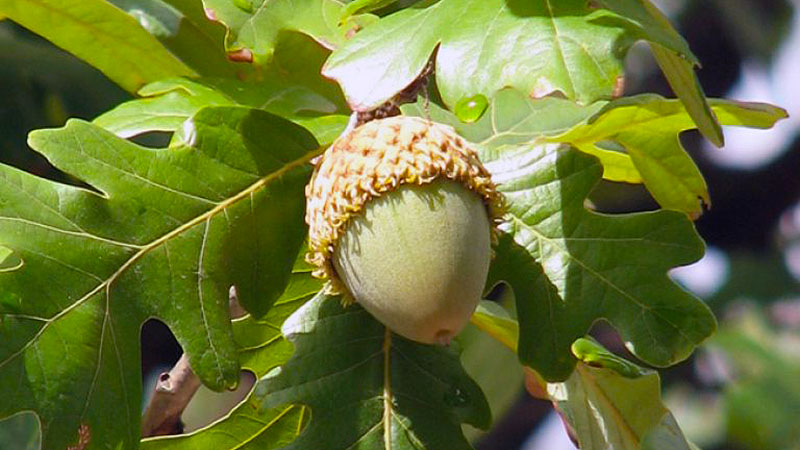
Bur Oak
Quercus macrocarpa
A massive, incredibly hardy North American native tree known for its distinctive fringed acorns and corky bark. Bur Oaks reach heights of 70 to 80 feet with an equally wide, sweeping canopy. They require full sun to thrive, although they are highly adaptable to clay, loam, or sandy soils, and tolerate both acidic and alkaline pH level and once established, have exceptional drought tolerance thanks to a massive, deep taproot system.
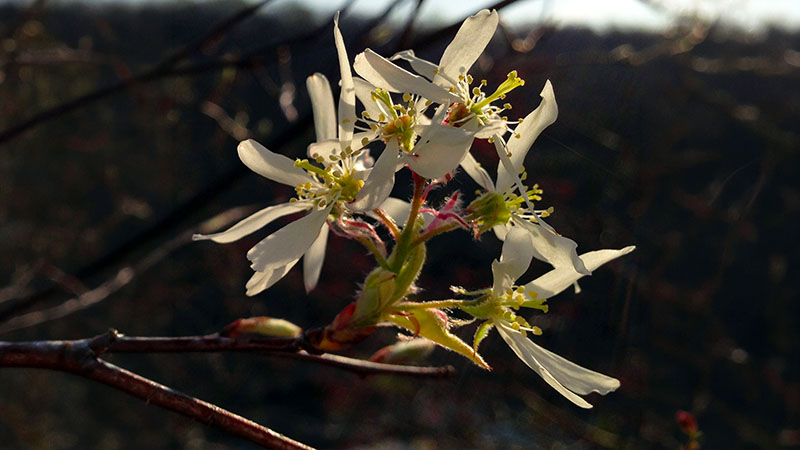
Downy Serviceberry
Amelanchier arborea
A four-season deciduous tree offering numerous pink-tinged buds which open into five-petaled, white pendulous flowers in the spring, small red berries in summer, excellent fall color, and gray bark in winter. The common name comes from the soft, woolly, downy hairs that cover the undersides of young leaves and flower stalks in spring before disappearing as the foliage matures. The fruit is usually eaten very quickly by birds.
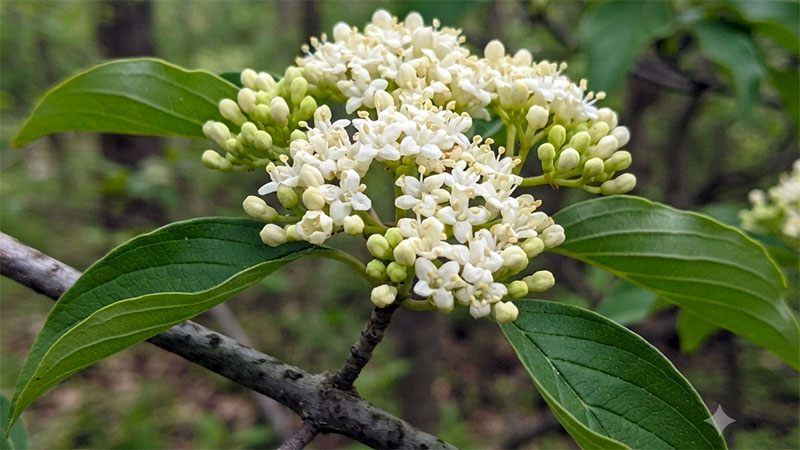
Gray Dogwood
Cornus racemosa
A highly adaptable, thicket-forming deciduous plant native to central and eastern states. While traditionally classified and grown as a multi-stemmed large shrub, it can be easily trained or pruned into a distinctive small ornamental tree reaching heights up to 15 to 25 feet. It is prized by homeowners and conservationists alike for its extreme toughness, multi-seasonal visual interest, and high wildlife value.
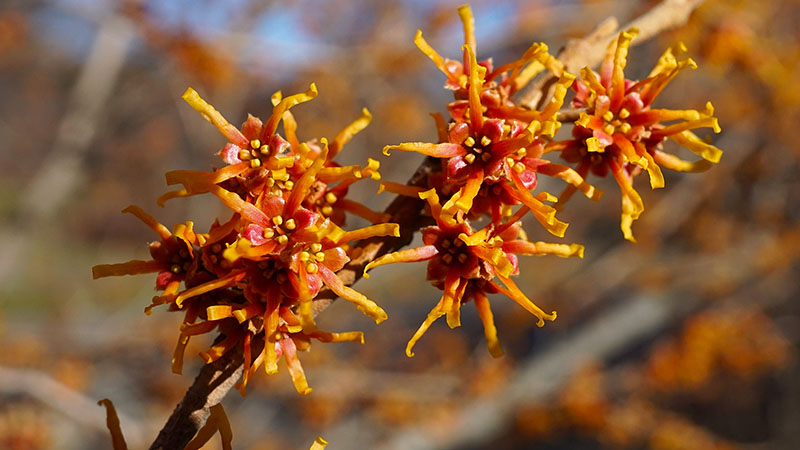
Ozark Witchhazel
Hamamelis vernalis
It is a large tough, multi-stemmed, deciduous, native shrub growing to 12 feet tall. Also known as the vernal witch-hazel, renowned for being one of the very first plants to bloom in North America. Native specifically to the gravel beds and stream banks of the Ozark Plateau across Missouri, Arkansas, and Oklahoma, this plant defies the winter cold by exploding into highly fragrant, ribbon-like blossoms as early as January and lasting into March.

(816) 331-9738
info@critsite.com
16245 S US Hwy 71
Belton, MO 64012
Mon - Thurs: 7:30 - 4:30
Fri: 7:30 - 4:00
CRITSITE, the Midwest's largest producer of native plants, trees and shrubs, has two production facilities plus our Prairie and Wetland Center. We grow and market over two million plants annually and are committed to excellence and to the success of every landscape project we supply.