
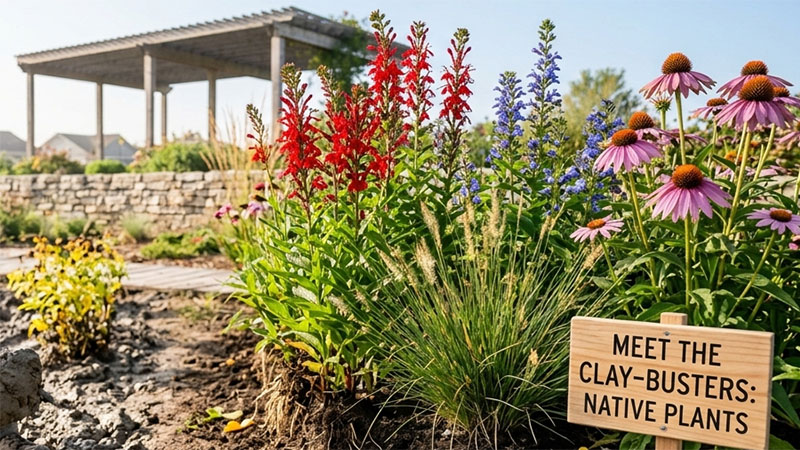
Cardinal Flower, Blue Lobelia, Soft Rush, Purple Coneflower and hundreds more. These native plants aren’t just pretty faces. Unlike non-native cultivars, their more tender, horticultural cousins, native plants have adapted to their environment’s climate and are rugged and ready for action.
Often called “clay-busters,” native plants are survivors that use their deep roots to reach deep for moisture and nutrition. And as they reach for sustenance, their roots are also stabilizing the surrounding soil and creating mini-channels for surface water to percolate down into the groundwater.
Amend the soil? I think not.
I’ve gardened with native plants for nearly 30 years and I’m always astonished at the amount of abuse and neglect they withstand. Did I say, “withstand?” Let’s make that, “thrive on.” I’ve come to imagine each new garden project as a challenge that calls for a native plant SWAT team. Armed with the talents and characteristics that have allowed the plants to endure over tens of thousands of years, it seems naive to me to think that amending the soil is necessary unless your site’s soil is excessively soggy and gummy. In most cases, soil amendments will do little more than make the native plants shake their heads and say, “Hey, what do you think we are, soft?”
No, on the contrary, I think it’s best to break the news to the hard-working native plants right away. “Guys, you’ve been brought in to do a job that only you can do. Get started!”
Nowhere is this truer than with the rain garden. Properly selected native plants will survive the periods of inundation and drought that are par for the rain garden’s course. In each naturally occurring plant community—forest, wetland, glade, prairie and savannah—there are growing zones based on moisture. The U.S. Department of Agriculture designates these zones, also called hydrologic designations. Select local-source native plants for your rain garden that prefer wet to sometimes wet (facultative wet to facultative to facultative upland) and then plant them accordingly. These are native plants that naturally occur around, but not in the standing water of, a natural wetland. Native plants that occur almost always in standing water are called “obligate.” Obligate plants are good choices for water features that maintain a water level, but will not work as well in a rain garden that is dry most of the time. Unlike a water garden or garden pond, rainwater drains from rain gardens within a couple of hours after a shower. By using the right native plants for each planting site, you’ll have working gardens that just happen to be beautiful–with a minimum of maintenance.
Just remember, the hard-working native plants are ready and waiting for your call.